Service area
Well pump repair in Thermalito, CA
Thermalito is the easiest pump work in Butte County, and that is meant as a compliment to the geography rather than a knock on the work. Flat ground, shallow wells, a truck that gets to the wellhead, and a pull that is over before lunch. If your quote comes in low here, the reason is the hole, not the standard. Call to get connected with a licensed local pump contractor.
Cheap here does not mean lesser
This deserves saying plainly, because people get suspicious of a low number and they are right to in most trades. Pump work is different, and here is why.
The pump itself is a modest slice of the bill. What you are really paying for on a submersible job is depth. Every foot of well is another foot of drop pipe, another foot of wire, and more weight to haul up out of the ground and lower back down without dropping any of it. Depth adds something like $500 to $1,000 for every additional 100 feet, and that is real material and real labor rather than a markup somebody invented.
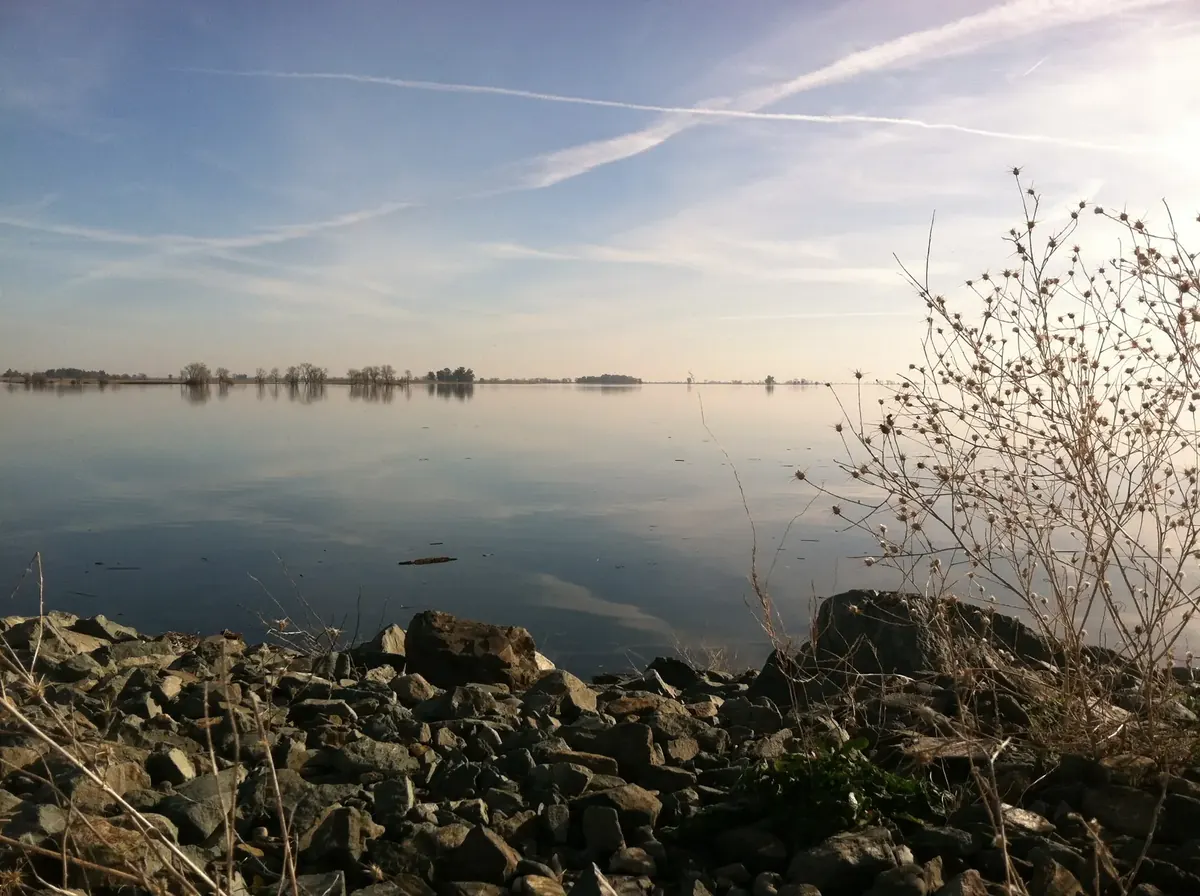
West of Oroville, out toward the Thermalito Afterbay, you are on flat alluvial valley ground at the low end of the county's elevation. Wells here are commonly in the 100 to 200 foot range. So a submersible replacement lands at $1,500 to $3,000, which is the bottom of the county range, and it lands there because there is simply less well to deal with.
Take the identical pump out of the identical box and put it in a 400 foot hard rock well up in the foothills and the same job runs $2,800 to $5,500. Same part. Same contractor. Same care. Different hole. Your Thermalito quote is not a cheaper pump or a cut corner. It is a shorter hole, and you should take the win. The whole arithmetic is laid out on the well pump replacement cost page.
The other thing flat ground buys you
Access. Nobody talks about it until it is a problem, and out here it never is.
On a foothill parcel a contractor may be walking equipment down a long gravel driveway, working on a slope, or figuring out how to get a truck close enough to a wellhead that is tucked behind a hill. All of that is time, and time is the bill. In Thermalito the truck generally parks near the well, the boom lines up over the casing, and the pull starts. That difference is invisible on the invoice and it is a real part of why numbers here sit where they do.
It also makes the same day call realistic. You are minutes from where the contractors are, not an hour and a half up a mountain, so a Tuesday morning no water call has a genuine chance of being a Tuesday afternoon fix.
No water this morning? Describe the symptom and get a straight answer.
What actually fails out here
Because the wells are shallow and the pulls are easy, the interesting part of Thermalito pump work is usually not the pump. It is everything above ground, and that is good news for your wallet.
Pressure switches are the workhorse failure. A $150 to $350 part that, when it dies, produces exactly the symptom everyone reads as a dead pump: nothing at the tap. It is worth ruling out before anybody quotes you four figures.
Pressure tanks are the quiet killer. Knock on yours. It should sound hollow across the top and solid down at the bottom, because the top half is supposed to be air. If it sounds solid the whole way up, the bladder is done and the tank is waterlogged. A waterlogged tank makes a healthy pump start and stop constantly, and that cycling is what actually wears pumps out. It is a cheap problem that quietly manufactures an expensive one. The pressure tank page covers it. On its own, replacement runs $800 to $3,900 depending on size. Done at the same time as a pump job, it is only $200 to $500 extra, which is the argument for handling both at once while the truck is already in the yard.
The breaker is free to check and worth thirty seconds. A 240 volt double pole breaker can be tripped without looking tripped. Push it firmly to off, then back on.
If none of that is it, a service call and diagnosis runs $95 to $185 and is usually credited toward the repair. That is the entire point of the repair page: the $200 fix and the $3,000 fix are indistinguishable from your sink, and looking is cheaper than guessing.
Sand is the local wildcard
Shallow alluvial wells sit in sediment, and sediment is exactly what it sounds like. Sand is common through this part of the valley, and sand is hard on a pump. It works as an abrasive on the impellers, and a pump that is passing sand is a pump on a shortened clock.
The tell is grit at the bottom of a glass, sediment collecting in fixtures or the toilet tank, or a pump that failed noticeably earlier than the 8 to 15 years a submersible ought to give you. If yours died at six, something caused that, and putting an identical pump back in the identical conditions buys you another six. Worth raising when you call, because it changes what a contractor looks at and sometimes what they recommend going back in. It is also part of what a flow test is for, and at $200 to $400 that is a cheap way to find out what your well is really doing.
What to say on the phone
Describe the symptom, not the diagnosis. "No water at all" points somewhere different than "it sputters and spits air" or "the pump runs constantly and never shuts off." If you know roughly how old the pump is, say that too. And if there is sand or grit anywhere in your water, lead with it.
Nearby
The contractors we refer cover Oroville just east, where the ground starts to climb and the numbers start to move, along with the rural parcels south around Palermo and the flats running down the valley toward Biggs.
Get connected with a licensed local pump contractor.